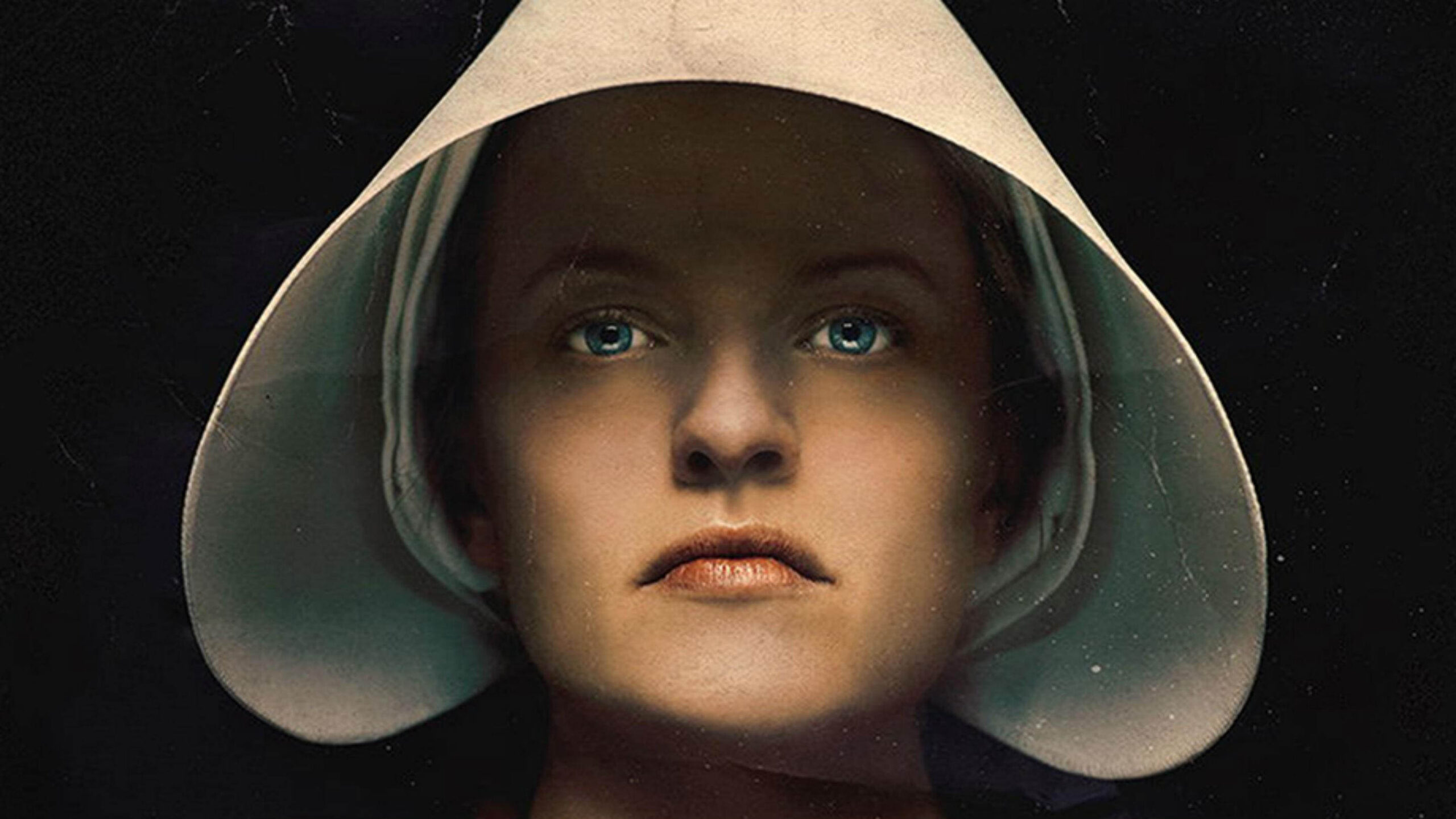
“I wish this story were different,” Offred, the narrator, says in Margaret Atwood’s 1985 novel, The Handmaid’s Tale. “I wish it showed me in a better light, if not happier, then at least more active, less hesitant, less distracted by trivia.”
In the Hulu adaptation of the novel, now in its second season, Offred gets her wish. The televised version of the story presents its protagonist in a much better light. She is more active, and much more focused, if not happier. The character played by Elisabeth Moss is tough and courageous, where her literary predecessor is weak and uncertain.
The Handmaid’s Tale on screen is a call to resistance, as the novel was not. In giving Offred more agency, though, the adaptation also loses some of the book’s bleak insight. It becomes a more conventional story about rebellion and heroism, rather than a narrative that values the sort of people who hesitate and make imperfect choices in the face of oppression.
This is not to say that the Hulu series is a cheery, feel-good romp. The TV show, like the book, is set in a future America in which a declining birthrate has led to reproductive panic. A group of religious-right extremists leverage these worries to take over the United States and impose a totalitarian patriarchal theocracy. Gay, lesbian and trans people, religious minorities and political radicals are hunted down and murdered, or sent to die working in the “colonies.” Fertile women become “handmaids”—enslaved women parceled out to important party members to be ritually raped in the hope of bearing children to be raised by their “owners.” Handmaids lose their given names; “Offred” means “of Fred”—the Commander to whose household Offred belongs.
In the novel, the narrator never tells us her real name; it’s as if she’s so cowed, she can’t even whisper her true identity to the reader. She notes, throughout, that she is a “wimp.” Her friend Moira is the one who stages an escape from the handmaids’ group dorm and training center. Offred is in awe of Moira’s fierceness and determination, but she doesn’t share it. Even when Offred makes contact with an underground resistance, she’s too apathetic and wishy-washy to take any action for them. They try to get her to spy on her Commander, but she’s unwilling to risk it.
On the show, in contrast, we know Offred’s real name: June Osborne. The reason we know it is that June insists on it; she claims her name and her self with a fierceness that Offred never displays in Atwood’s version. In the novel, Moira escapes alone. In the first season, where Moira is played by Samira Wiley, she and June act together. And it’s June who pushes Moira to make a second, successful escape attempt across the border into Canada.
At the conclusion of the novel, June herself escapes, in an attempt engineered by her Commander’s driver, Nick, who has fallen in love with her. This escape is something that happens to June, out of nowhere, rather than something she sets up for herself. At the beginning of the second season, though, we see June actively engaged in her own bid for freedom, demanding others help her, taking risks and generally seizing control of her own destiny. The camera throughout the series insistently lingers on Elisabeth Moss’ sharp, expressive features, which radiate determination and defiance.
If all we see are Junes in fiction, we may end up despising the Offreds.
June’s Commander, Mr. Waterford, played by the oleaginous Joseph Fiennes, says June is “strong”, and the entire show cosigns him. June can can be cowed or intimidated, but she retains a death grip on her self and her soul. Even when she has a mental break for an episode or so, she snaps back quickly to her old, indomitable self. Offred in the novel is defined by her vagueness; Elisabeth Moss’ June is a presence.
June’s fierceness means that her story is about resistance—and as often as not, successful resistance. Offred’s acts of rebellion in the novel are generally compromised and ineffectual. She hides butter from dinner so that she can moisturize her hands, she sways her hips beneath her red robe to taunt the Guardians who keep the handmaids from escaping.
Defiance in the Hulu series, though, is meaningful. Multiple characters escape the Gilead regime. June refuses to participate in an execution ritual. The second season also spends some time in the colonies with other characters, who manage to take revenge on some of their oppressors and assert their humanity despite the grinding cruelty of their day-to-day lives. The television version of The Handmaid’s Tale presents a world in which oppression is horrifying and deadly, but in which individual courage and resistance is valuable and significant.
With one eye on the Trump regime, June’s story has been transformed by the showrunners into a call to fight, to demonstrate and to hope. The show is sad and brutal, but it’s also filled with optimism. It’s meant to inspire you to fight fascism and fight the patriarchy. It calls you to be strong, like June.
Examples of resistance are valuable, and especially so now. Those examples can also feel a little glib, though. Screens are filled with heroic figures fighting injustice, after all. Protagonists who stand out for their strength are, contradictorily, a lot more common than protagonists who fade into the background. Offred’s indistinctness was more distinct, in many ways, than June’s memorable features.
The problem with the glut of courageous resisters on screen is that most people don’t necessarily face oppression with courageous resistance. If we can only tell stories about people who don’t bend in the face of adversity, will we be able to sympathize with all those people who, in real life, vacillate and cower and fail when failure is not an option? If all we see are Junes in fiction, we may end up despising the Offreds. And if we despise victims, it’s difficult to resist those who are victimizing them.
“People will do anything rather than admit that their lives have no meaning. No use, that is. No plot,” Offred muses in the novel. June’s life has meaning; the Hulu series is filled with plot. The show’s writers insist that even in the worst of times, in the face of oppression, people can choose to resist evil and to be true to themselves. Atwood, though, wanted to remind us that even those who don’t, deserve to be free.