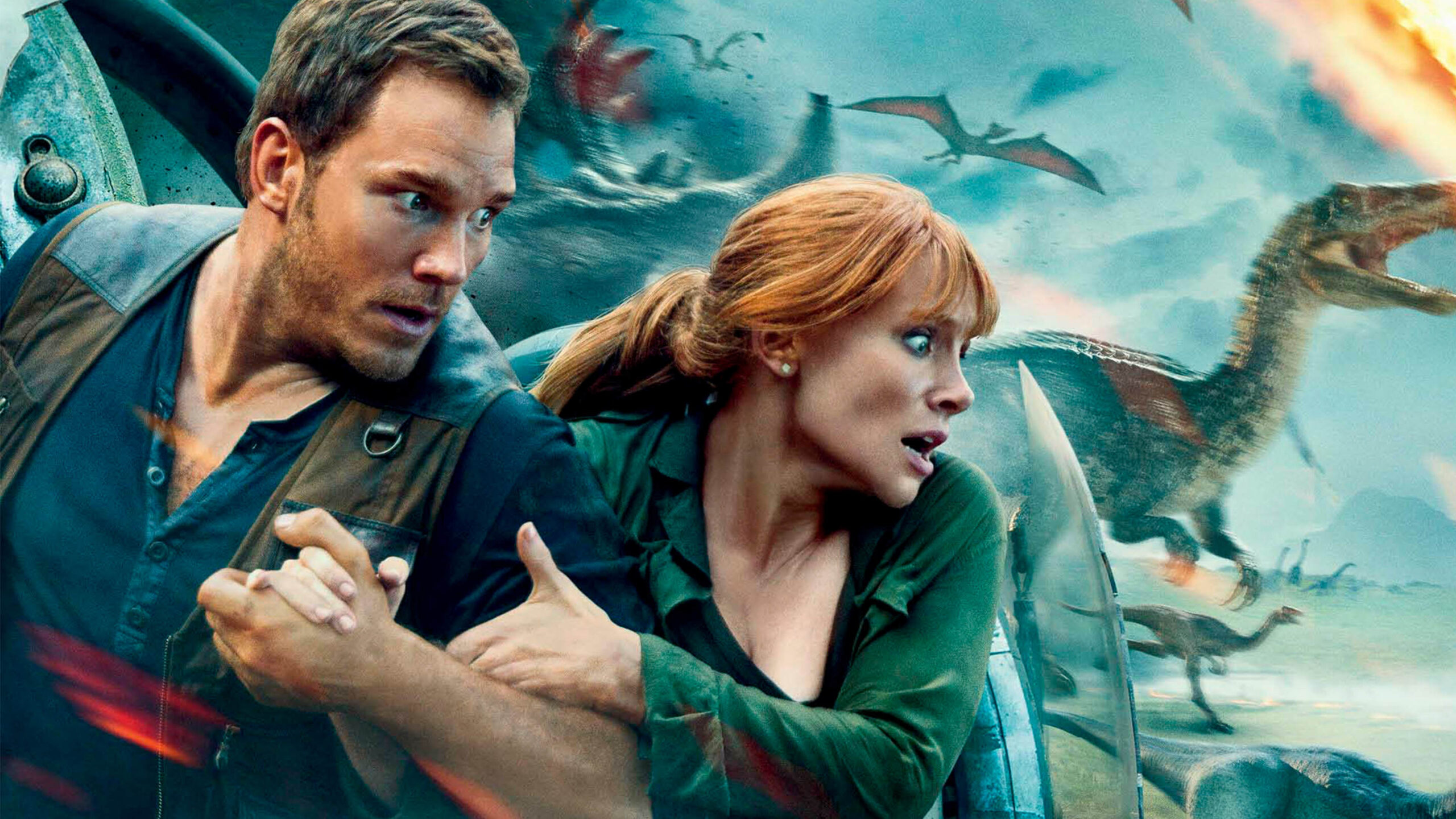
How big a hit is Jurassic World: Fallen Kingdom? It had the third-biggest opening weekend of the year to date, and the biggest opening weekend of any movie in 2018 that didn’t bear the Marvel logo; in fact, it made almost twice as much in the U.S. on its opening weekend as Disney’s Solo: A Star Wars Story ($150 million versus $84 million, according to estimates).
That’s not all. It’s the second-biggest opening in the studio’s history, behind—of course—Jurassic World in 2015. (That studio, by the way, is Universal, which also owns the Fast and Furious and Despicable Me franchises, as well as little-known movies like E.T. and Jaws. So, you know—Jurassic World: Fallen Kingdom is kind of a big deal.)
Of course, Jurassic World: Fallen Kingdom might not appear to be important as anything more than the prompt for some snark to those looking for discussion online, where there’s pretty much just one narrative surrounding the movie even before its release: Jurassic World sucks, and the only good Jurassic movie was the first one. (Check out Playboy‘s own Fallen Kingdom review here.) I’m not arguing against that idea—the closest I’d come to a counterargument would be that the first movie isn’t as great as everyone remembers it being, either, to be honest—but nonetheless, it seems odd that one of the most successful movies of the year has fewer people on the internet singing its praises than the less-successful Ocean’s 8, Solo or even Gotti, of all things.
Odd, perhaps, but not entirely surprising. Whereas, once upon a time, the release of a blockbuster movie was enough to get film critics to turn their noses up in snobbery at the very idea of something cynically engineered to purely entertain its audiences, the combination of increasingly sophisticated big-budget fare and an audience (and critic base) raised on the first blockbusters has softened that stance, considerably … kind of. These days, yes: Most superhero movies and Star Wars installments get treated with the same respect, analysis and reverence as more serious, intellectual fare—as they should—along with the addition of rabid fandoms keeping conversation alive on social media and conventions alike. But that attitude isn’t shared evenly across genre material or blockbuster movies, creating an oddly tiered system that discounts movies that deserve more attention for a number of reasons.
On the one hand, it’s tough to argue that Rampage—the video-game adaptation starring Dwayne Johnson that really did come out earlier this year, although no one noticed at the time—should be the subject of any considerable investigation; it was released and disappeared without a trace, leaving no impact on audiences or critics alike. But Fallen Kingdom, as discussed above, is clearly resonating with audiences on some level, and is attempting to engage with the world in a way that deserves some consideration, including the questions it raises around genetic engineering or ecological balance. Surely it deserves more than being dismissed with a mere 50 percent on Rotten Tomatoes?
“Fallen Kingdom is the latest example of a massively successful movie that is quietly removed from wider conversations about pop culture and cinema as a whole.”
Fallen Kingdom is just the latest example of a trend that has been present for some time: a massively successful movie that is quietly removed from wider conversations about pop culture and cinema as a whole because, basically, it isn’t “good enough”—in some nebulous sense that is part objective quality and part subjective “coolness”—to matter. Jurassic World fell into the same boat three years ago, as have all of the Transformers movies to date, and even Avatar, a movie that has become the butt of so many jokes despite remaining the second most-successful movie in history, almost a decade after its release.
Despite their success, these movies are either treated as punchlines or dismissed out of hand by critics and fans alike; they’re the movie equivalent of “flyover country,” the concept of states in the middle of the U.S. that are ignored by news media and culture at large. As the nation continues to splinter along personal, political and cultural lines, is there value in thinking critically and taking interest in what others enjoy, and trying to rebuild some common language—even language made out of dinosaurs-run-amok movies? Owen Grady might not have been able to save Isla Nublar, but maybe there’s something to be learned about co-existence from the movie after all.