“Fossils are static things,” Martin Amis wrote in his review of Michael Crichton’s novel The Lost World in 1995, “but they are elastic in our imaginations, and we shape them to our needs.” This goes some way to explaining what Steven Spielberg had accomplished when he brought Jurassic Park to the silver screen just two years earlier. Spielberg, Hollywood’s visionary boy wonder, didn’t merely take dinosaurs out of Crichton’s pulpy novels. He took them out of the history books, and sent them marching triumphantly from multiplex screens into the popular imagination worldwide. It isn’t quite right to say that Jurassic Park did for dinosaurs what Jaws had done for sharks. The effect was bigger than that. It did for dinosaurs what the combustion engine did for cars. Something we hardly ever thought about was suddenly the only thing on our minds.
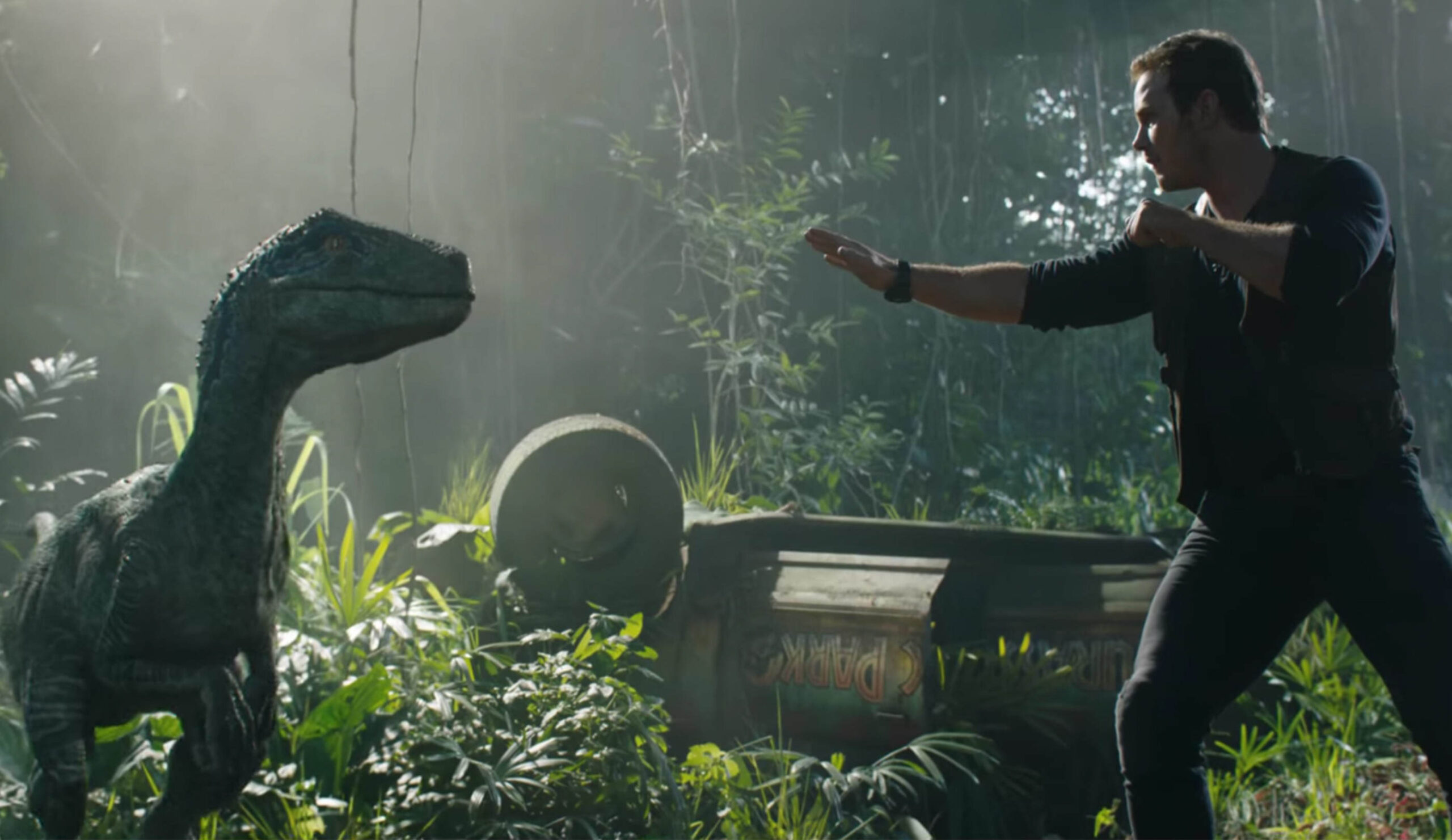
It still is—or so it sometimes seems. It would have been easy to predict, when the movie was released 25 years ago today, on June 11, 1993, that Jurassic Park would emerge as a sensational marquee hit, an international blockbuster with enduring critical and commercial appeal. What’s surprising, in retrospect, is not that it remains a cultural touchstone for a generation wowed by it two decades ago, but that it continues to serve as fodder for the Hollywood machine, which has managed so far to churn out no less than four super-sized Jurassic Park sequels, the latest of which arrives in theaters everywhere later this month. The story of an ill-fated futuristic amusement park and the visitors who narrowly escape its carnivorous inhabitants does not exactly strike one as a fertile basis for a franchise. And yet here we are, staring down Jurassic World: Fallen Kingdom and its already-underway, untitled sequel, due out in another three years.
A steady procession of sequels might be more thrilling if the subsequent films included a beloved standout or two. Alien had Aliens; The Terminator had Terminator 2; Star Wars and Star Trek have enjoyed ups and downs that, on the whole, balance out. Even the Fast and the Furious series still satisfies as far as its eighth installment. But Jurassic Park seems, on some level, fundamentally averse to imitation. There is something about the original movie that apparently cannot be replicated, and every attempt to date to recapture its elusive magic has resulted in diminished returns. Of course they continue to be enormously, unprecedentedly successful at the box office—Jurassic World earned 1.6 billion dollars and is at the moment the fifth-highest-grossing movie in history, to go along with mostly positive, if not overly enthusiastic, reviews. But that speaks more to our collective nostalgia and how badly we, too, wish we could experience Jurassic Park again for the first time.
To understand why Jurassic Park’s sequels for the most part don’t quite work, you only have to go back and look at why Jurassic Park does. But even that is a bit mysterious. Twenty-five years ago, the movie was acclaimed for its state-of-the-art special effects, and in particular for its stunning integration of groundbreaking digital-effects work and computer-generated imagery. At the same time, the movie was criticized for its reliance on just those innovations—a crutch, some critics felt, that cheaply emphasized spectacle over drama and real human feeling. “The movie delivers all too well on its promise to show us dinosaurs,” Roger Ebert wrote in his lukewarm review of the film. “We see them early and often, and they are indeed a triumph of special-effects artistry, but the movie is lacking other qualities that it needs even more, such as a sense of awe and wonderment.”
It’s amazing to keep these words in mind, watching the movie again today, only because Jurassic Park seems so obviously rich in exactly those qualities. Awe and wonderment are the defining virtues of the film, alongside fear, delight and a sense of discovery that extends from the science of extinct species right down to the science of cutting-edge Hollywood effects. If the movie is heavy on VFX wizardry, it’s because Spielberg himself was relishing the wonder of all this novel technology, as much in awe of its creative possibilities as the park visitors are of the dinosaurs walking around them. There’s an amazing symmetry in Jurassic Park between what the characters are feeling on-screen and what the audience is feeling in the cinema. Both we and they are looking at something dazzling and frightening and beyond belief. They can’t believe John Hammond created a park full of living, breathing dinosaurs. We can’t believe Steven Spielberg did the same thing on-screen.
There’s an amazing symmetry in Jurassic Park between what the characters are feeling on-screen and what the audience is feeling in the cinema.
“In many ways, it’s one of Steven’s really great movies,” producer Kathleen Kennedy said in 2013 in a retrospective interview about the film. “When you look at what the technology spawned, it’s pretty remarkable what a game-changer it was.” Spielberg, meanwhile, was more blunt in explaining its ongoing appeal: “I think people like Jurassic Park because it’s a helluva yarn.” That it is—but the director’s deft touch can’t account for the greatness of the film alone. 1997’s The Lost World, the first Jurassic Park sequel, was directed by Spielberg with no less aplomb, and as blockbuster yarns go, it has plenty of showy set pieces and sequences staged with consummate skill. The problem is mainly one of redundancy. The Lost World, in common with each of the later films in the franchise, has a distinctly warmed-over quality, a stale scent that betrays the very spirit of the original film. Which suggests perhaps the issue isn’t that they keep botching Jurassic Park sequels. It’s that a truly great Jurassic Park sequel can’t be done.
“One of the things I responded to when I read Jurassic Park was that it was primal,” Spielberg said on the set of the film. “And I respond to primal things in nature and man.” We all do. The secret to the success of Jurassic Park is that there’s something primal not only in its story of nature and man, but in the very essence of what it achieves technically and creatively, of what it makes possible and realizes so vividly on-screen. There is something deeply and profoundly affecting about that first glimpse of one of Spielberg’s dinosaurs, and the movie itself is entirely fixated on that sensation and the bone-deep feelings of awe and delight and fear that it provokes. It’s not just a special-effects showcase or a buffet of state-of-the-art tech. It is, more beautifully and irreplicably, a movie all about discovery and spectacle, about the power of the imagination and how it can shape static things to our needs. That’s not something you can simply do over. It’s a once-in-a-lifetime film.